
Whether you’re outsourcing IT services for the first time or considering a switch to a newly managed IT provider, choosing the right partner involves much more than comparing prices. SolidBase IT will guide you through how to choose an IT provider, the key questions to ask, the benefits to look for, and why working with a local Utah IT support company can give your business a significant advantage. The goal of SolidBase IT is to help you avoid costly mistakes, make informed technology decisions, and discover opportunities to strengthen your IT environment, security, and long-term business growth.
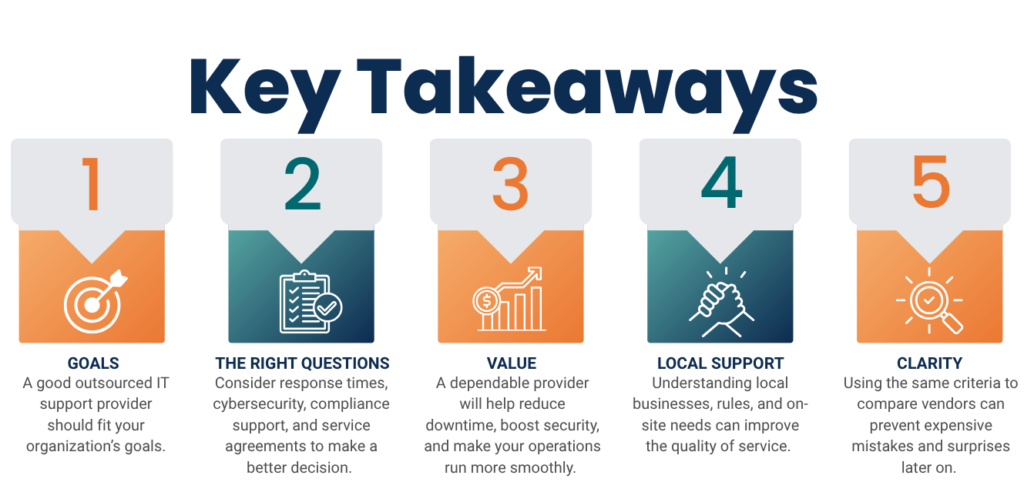
The Right Questions for Choosing Your Outsourced IT Support Provider in Utah
Let’s face it. Technology plays a critical role in nearly every aspect of running a business today, which makes reliable IT support more important than ever. Whether you’re outsourcing IT for the first time or considering a switch to a new provider, choosing the right partner involves much more than comparing prices. Evaluating a provider’s technical expertise, cybersecurity capabilities, service quality, and long-term value can help ensure your business remains productive, secure, and prepared for future growth.
Before you begin your search, take a step back and consider your organization’s unique technology needs. What IT challenges are you facing today? Which systems will require ongoing support as your business grows? And most importantly, which provider can help you keep pace with rapidly changing technology while aligning IT with your business goals?
For Utah businesses, these decisions can be even more important. Companies managing hybrid work environments, multiple office locations, industry compliance requirements, or growing technology demands need an IT partner that can adapt as their needs evolve. By asking the right questions, you’ll be better equipped to identify a provider that can support your business today and continue delivering value long into the future.
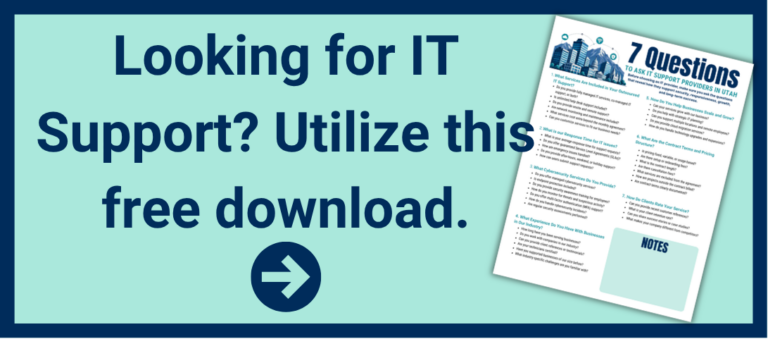
To help simplify the evaluation process, SolidBase IT has put together seven key questions every business should ask before choosing an IT provider along with a FREE printable PDF that you can take into your next IT Strategy Meeting. (Check it out below.)
Why Asking Questions Before Choosing an IT Provider Matters
While many IT service providers offer similar solutions, their approach, responsiveness, expertise, and level of support can vary significantly. Choosing the right IT partner can feel overwhelming, especially if you’re unsure which questions to ask during the evaluation process. To make the decision easier, SolidBase IT has compiled a list of essential questions to help guide your search. By asking the right questions, you’ll gain valuable insight into a provider’s experience, security standards, communication style, and overall ability to support your business’s technology needs.
-
What Services Are Included in Your Outsourced IT Support?
IT providers offer a wide range of service levels, and not all support packages are created equal. Some providers deliver comprehensive managed IT services, including cybersecurity, cloud management, network monitoring, data backups, infrastructure management, and strategic IT consulting. Others may focus primarily on help desk support and basic troubleshooting.
When evaluating a provider, ask for a detailed breakdown of included services, available add-ons, and any support limitations.
-
How Quickly Do You Respond to IT Issues?
Response time is one of the most important factors to consider when choosing an IT provider. After all, every minute of downtime can mean lost productivity, frustrated employees, unhappy customers, and disruptions to your daily operations.
When evaluating IT support providers, ask about their Service Level Agreements (SLAs), average response and resolution times, and how they prioritize and handle critical issues. These details can give you a clear understanding of how quickly they can restore operations when problems arise.
A reliable IT provider should also have a well-defined plan for maintaining business continuity during emergencies. Ask whether they offer after-hours support, emergency response services, documented escalation procedures, and regular performance reporting.
-
What Cybersecurity Services Do You Provide?
Cybersecurity should be a core part of any IT support offering, not an optional add-on. As cyber threats continue to evolve, businesses need more than just reactive support. They need a proactive strategy that protects their devices, networks, cloud environments, and sensitive data. When evaluating IT providers, ask how they approach cybersecurity and what measures they have in place to help prevent attacks, minimize downtime, and keep your business protected.
Make sure cybersecurity services are actually included in their offering, and they have a plan in place to handle them. A strong security program should include endpoint protection, multi-factor authentication (MFA), security monitoring, threat detection and response, patch management, email security, employee cybersecurity training, and reliable backup and disaster recovery solutions. These tools and practices work together to reduce risk and strengthen your organization’s overall security posture.
-
Do You Have Experience Supporting Businesses Like Ours?
Industry experience can make a significant difference when it comes to the quality of IT support you receive. Providers that work regularly within your industry are often able to solve problems more efficiently, offer more relevant recommendations, and anticipate challenges before they become major issues. They’re already familiar with the software, compliance requirements, security concerns, and day-to-day demands that businesses like yours face.
Whether you’re in healthcare, finance, legal services, manufacturing, or another specialized field, partnering with an IT provider that understands your industry can save time, reduce risk, and improve operational efficiency. Choosing a provider that already speaks your language can help keep your business running smoothly, support regulatory compliance, and position your organization for long-term success.
-
How Do You Support Business Growth?
As your business grows, your technology needs will evolve right along with it. That’s why it’s important to choose an IT provider that can scale alongside your organization without disrupting day-to-day operations. Whether you’re opening new locations, supporting a remote workforce, migrating to the cloud, upgrading infrastructure, or planning for future growth, your IT partner should have the expertise and resources to support every stage of the journey.
When evaluating providers, ask how they handle business expansion, technology upgrades, cloud adoption, and long-term IT planning. Their answers can reveal whether they’re built to support your organization not only today, but years down the road.
A scalable IT provider does more than solve current challenges. They help prepare your business for what’s next. By partnering with a provider that can grow with you, you’ll benefit from smoother operations, better technology planning, and fewer disruptions as your business evolves.
-
What Does Your Service Agreement Include?
Before signing with any IT provider, take the time to review the service agreement carefully. A well-written contract should clearly outline the services being provided, each party’s responsibilities, and the level of support you can expect. Understanding these details upfront can help you avoid unexpected costs, prevent gaps in service, and ensure the partnership aligns with your business goals.
As you review the agreement, pay close attention to what’s included and what’s not. Ask about service fees, hardware and software costs, performance guarantees, support hours, on-site assistance, contract terms, cancellation policies, and any potential additional charges. A reputable provider will be transparent about pricing and expectations, making it easier to make an informed decision.
Think of the service agreement as the foundation of your IT partnership that determines whether your IT experience is smooth sailing or a future headache. When expectations are clearly defined from the start, it builds trust, reduces misunderstandings, and gives you confidence that you’ll receive the support your business needs both now and in the future.
-
Why Should We Choose Your Company Over Other IT Providers in Utah?
Every IT provider promises great service, so it’s worth asking what truly sets them apart. This question gives providers an opportunity to highlight their unique strengths and explain how they help businesses achieve their goals. Look beyond the sales pitch and listen for answers that focus on strategy, proactive support, and building long-term partnerships rather than simply fixing problems as they arise.
Of course, the real proof is in the results. Ask for examples that back up their claims, such as customer testimonials, industry certifications, client satisfaction ratings, cybersecurity expertise, consulting experience, and long-term customer relationships. If they’ve helped businesses with challenges similar to yours, that’s an even better sign.
Think of it this way: every IT provider can talk a good game, but the best providers can show you why clients continue to trust them year after year. A provider that can demonstrate real value, measurable results, and a commitment to your success is far more likely to become a trusted advisor than just another number in your contacts list.
When evaluating IT support providers, it’s important to look beyond cost alone. The right IT partner should offer responsive support, strong cybersecurity expertise, industry knowledge, scalable solutions, transparent agreements, and a track record of helping businesses succeed. These factors can have a significant impact on your organization’s productivity, security, and ability to adapt to changing technology needs.
By asking the right questions and carefully evaluating your options, you can choose a provider that supports both your current needs and long-term goals. Whether you’re comparing multiple vendors or exploring managed IT services for the first time, partnering with an experienced provider like SolidBase IT can help you reduce technology risks, avoid costly surprises, and build a reliable foundation for future growth.

Conclusion: The right questions will bring you to the right IT partner
After all, the best IT support isn’t just about fixing problems. It’s about helping your business succeed.
Frequently Asked Questions
To choose the right IT support provider in Utah, compare providers based on their service options, response times, cybersecurity capabilities, industry experience, scalability, customer reviews, and service agreements. Asking detailed questions during the evaluation process helps you determine whether the provider can meet your business needs and foster future growth.
Patch management, endpoint security, cloud services, cybersecurity protection, help desk support, active network monitoring, data backup and disaster recovery, and strategic IT planning should all be provided by a comprehensive managed IT services provider. These services decrease downtime, increase business security, and improve system reliability.
Service level agreements (SLAs) define the expected response times, resolution times, service availability, and provider responsibilities. Reviewing an SLA helps businesses understand the level of support they will receive and ensures there are clear expectations for handling technical issues and limiting downtime.
Cybersecurity is essential because IT support providers often manage critical business systems and sensitive data. A reliable provider should offer services such as endpoint protection, multi-factor authentication (MFA), threat monitoring, patch management, email security, employee security awareness training, and backup and disaster recovery to help protect your business from online threats.
In addition to price, effective IT support comparisons look at things like service offerings, response times, cybersecurity capabilities, industry experience, scalability, customer satisfaction, and contract terms. Businesses can make well-informed decisions and select an IT vendor who supports their long-term goals by using these criteria.
Many businesses benefit from a provider that offers both remote assistance and on-site support when needed, ensuring faster issue resolution and personalized service.

- VC3: 10 Questions to Ask Before Signing a Managed IT Services Contract
- MarcoNet: 10 Questions You Should Use When Evaluating a Business IT Service Provider
- DOCUmation: Outsourced IT Support vs. Managed Service Provider: What’s the Difference?
- IntelliSystems: 8 Questions to Ask Before Signing an IT Contract
- Kaseya: eBook Patch Management Policy Checklist
- IT Jones: Managed IT Service Evaluation: What to Ask Before You Sign