
Client trust is the foundation of every successful law firm, and that trust depends on the security of your technology. From confidential case files to privileged communications, protecting sensitive legal data requires more than basic cybersecurity measures. At SolidBase IT, we help Utah law firms build secure, reliable IT environments that support growth, compliance, and peace of mind. As more firms adopt cloud technologies and hybrid work models, a modern security strategy is no longer optional. It is essential.
This guide explains the key components of managed IT services for law firms, with a focus on cloud security, cybersecurity best practices, and the Zero Trust security model. Whether you’re a solo practitioner or a growing legal practice, understanding these concepts can help you protect client data, reduce risk, and maintain a competitive advantage.
This guide will walk you through the essentials of managed IT services for law firms, specifically focusing on Cloud security and the Zero Trust model. Our goal is to empower you through clarity, ensuring you feel supported, understood, and in capable hands.
Why Traditional Law Firm Security Is No Longer Enough
For years, many law firms relied on a traditional “castle and moat” approach to cybersecurity. If a user was inside the office network, they were automatically trusted. While this worked when employees primarily worked from a single location, today’s legal environment looks very different.
Attorneys now access case files from home offices, courtrooms, airports, and client meetings across Utah. Cloud applications, remote work, and mobile devices have expanded the attack surface, making perimeter-based security increasingly ineffective.
Cybercriminals actively target law firms because they store valuable confidential information, including financial records, contracts, intellectual property, and sensitive personal data. This shift has made advanced security frameworks such as Zero Trust a critical component of modern legal IT strategies.
What is Zero Trust?
Zero Trust is exactly what it sounds like:
Never trust, always verify.
Rather than assuming that users or devices within a network are safe, Zero Trust requires continuous verification of every access request. Every user, device, application, and connection must prove its legitimacy before gaining access to firm resources.
For Utah law firms, this approach provides several important advantages:
-
- Data Protection: Access permissions are restricted based on job responsibilities and business needs. Attorneys, paralegals, and administrative staff only have access to the information necessary to perform their roles, reducing the risk of accidental or intentional data exposure.
-
- Secure Remote Work: Lawyers can securely access case files, email, and legal applications from virtually anywhere while maintaining strong security controls and authentication requirements.
-
- Brand Trust: Clients know their data is safe, which builds long-term reliability and value.
-
- Reduced Risk of Cyberattacks: By continuously validating users and devices, Zero Trust helps prevent unauthorized access, ransomware infections, phishing attacks, and other common cybersecurity threats facing law firms.
Essential Managed IT Services for Law Firms
Technology should be more than a support function. The right managed IT services provider acts as a strategic partner focused on security, productivity, and business continuity.
When evaluating managed IT services for your law firm, look for a provider that offers the following:
-
- Proactive Monitoring: They identify and neutralize threats before they disrupt your billable hours.
-
- Compliance & Risk Management: Ensuring your cloud storage and email communications meet Utah State Bar ethical standards for “reasonable expectation of privacy”.
-
- Disaster Recovery and Business Continuity: Unexpected outages, natural disasters, and cyber incidents can disrupt operations. A robust disaster recovery plan ensures your firm can quickly restore data and maintain client service during emergencies.
-
- Advanced Cybersecurity Protection: A comprehensive legal IT strategy should include threat detection, endpoint protection, email security, vulnerability management, and employee cybersecurity awareness training.
-
- Cloud Management and Optimization: Effective cloud management improves accessibility, collaboration, scalability, and security while ensuring your technology continues to support your firm’s growth.
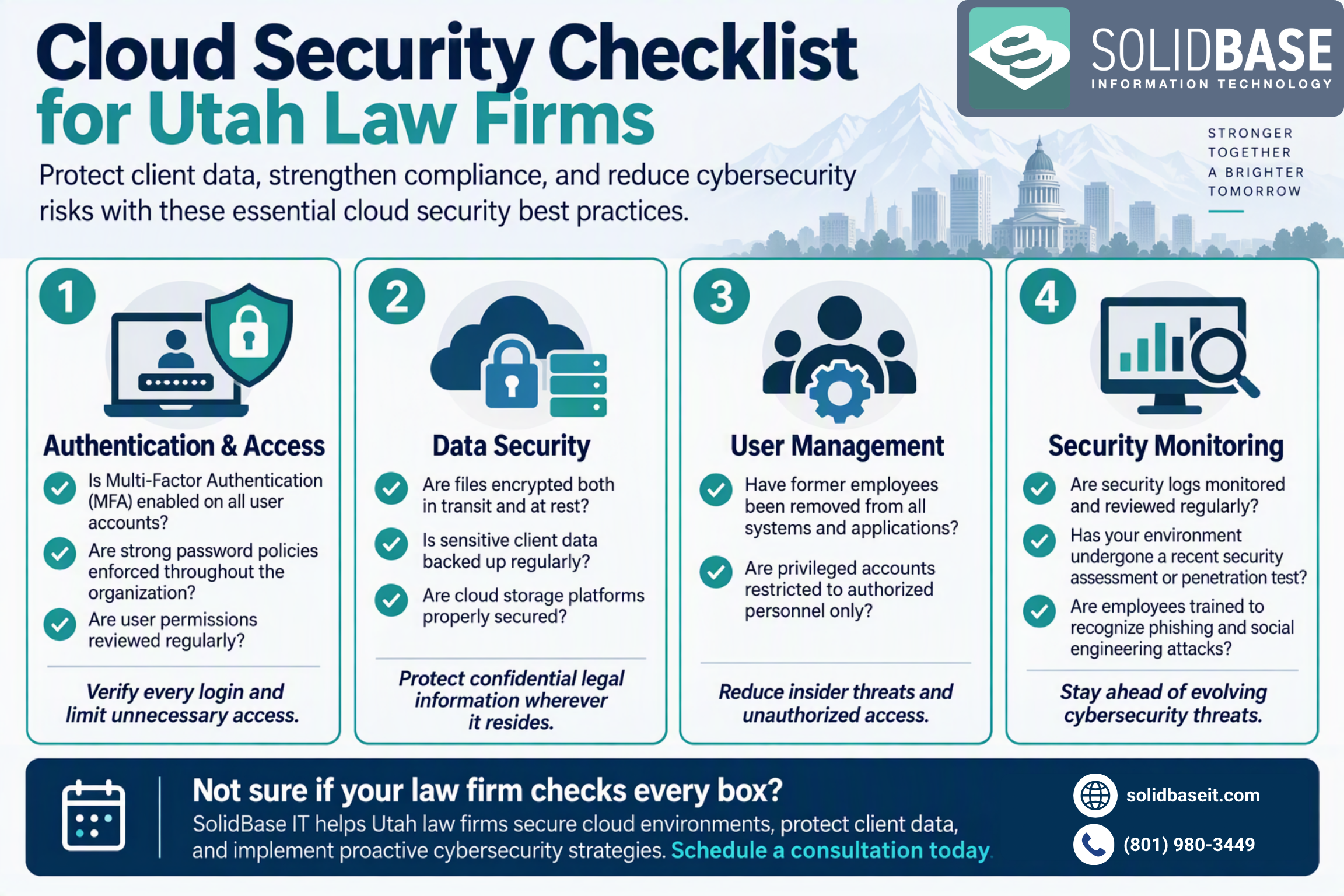
The Cloud Security Checklist for Attorneys
If your law firm currently uses cloud-based applications or is considering a migration to the cloud, review this checklist to assess your security readiness:
- Small to Medium Firms: A standard migration (email, file storage, practice management apps) typically takes 2 to 4 months.
- Complex Migrations: For larger firms with legacy databases or on-premise servers, the process can take 6 to 12 months.
- The Process: This timeline includes planning, data cleansing (removing old, unused files), secure transfer, and, most importantly, testing to ensure no data is lost.
A capable IT managed service provider will plan the “cutover” (the final switch) for a weekend or evening to minimize downtime. The goal is for you to log in on Monday morning with higher efficiency and ease.
Managed IT services provide ongoing technology support, cybersecurity protection, compliance assistance, and proactive maintenance. This allows attorneys to focus on serving clients rather than managing technical issues.
Common risks include phishing attacks, ransomware, weak passwords, unauthorized access, and improperly secured cloud environments. A comprehensive cybersecurity strategy helps mitigate these threats.
Yes. When implemented correctly with encryption, access controls, Multi-Factor Authentication, and ongoing monitoring, cloud storage can provide a highly secure environment for legal documents and client information.
Zero Trust reduces the likelihood of unauthorized access by continuously verifying users and devices before allowing access to sensitive systems and data.